
Tasmania
Tasmania’s marine environment supports significant marine industries, especially fisheries and aquaculture, and is undergoing rapid change due to climate change. These impacts are particularly clear on Tasmania’s east coast, which is strongly influenced by the East Australia Current carrying warm waters southward.
This warming has resulted in range expansion of species, impacting biodiversity and fisheries, and has precipitated a decline of temperate kelp forests.

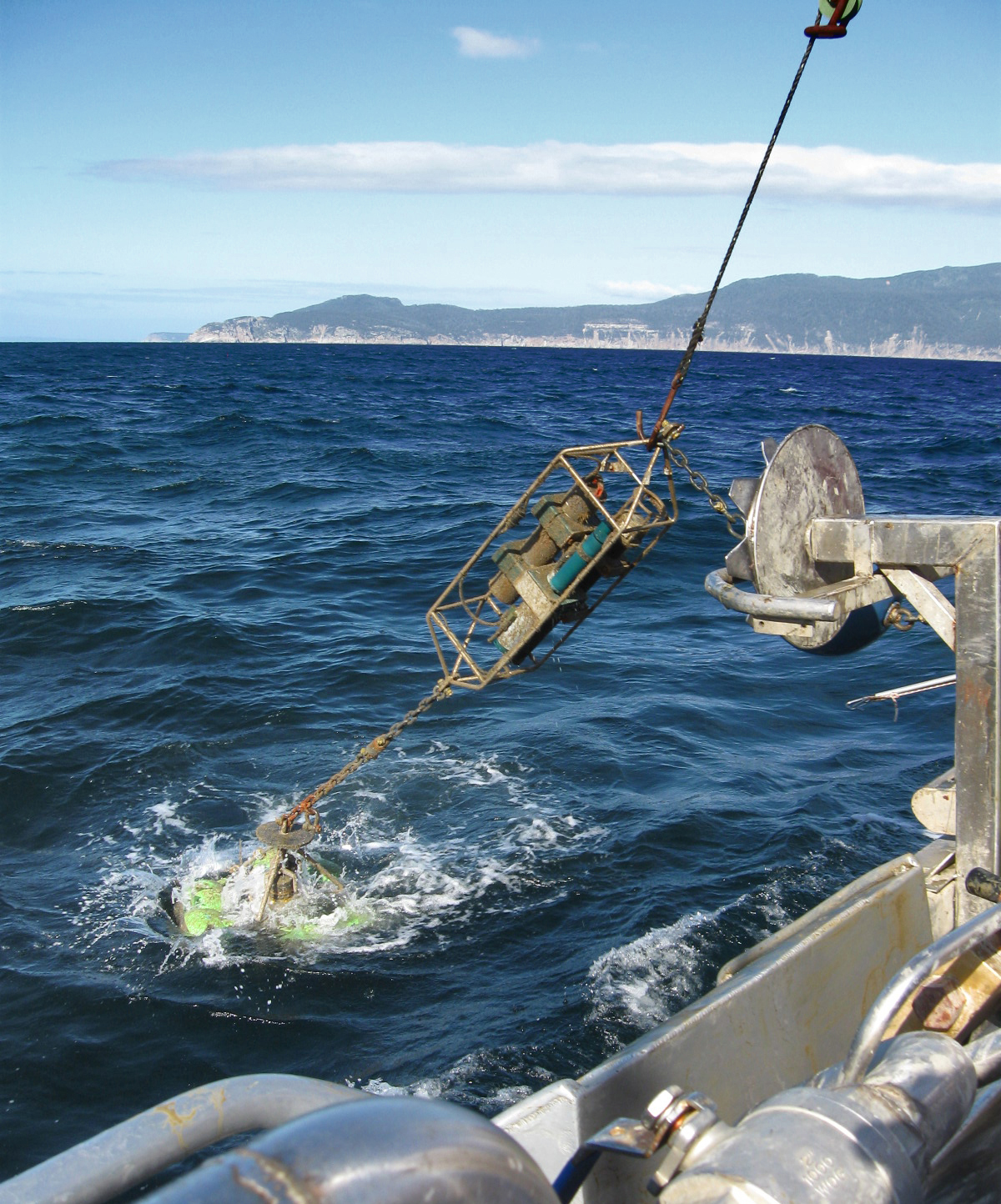
 Tim Fountain, CSIRO
IMOS’ sustained ocean observing infrastructure in Tasmania

National Mooring Network

Satellite Remote Sensing

Acidification Moorings

Wave Buoys
Deep Water Moorings

Ocean Gliders
Ships of Opportunity

Animal Tracking

Argo Floats

Coastal Wave Buoys
The Tasmanian marine science community has used IMOS observations to produce
282
Journal Articles
88
Reports
90
Projects
39
Data Projects
74
Postgraduate Projects
Tasmanian institutional users of IMOS observations
13
Government Departments & Research Agencies
11
Research Collaboration & Non-government
15
Industry & Services
1
Universities
IMOS office and state partnerships
The IMOS Office coordinates IMOS Facilities across the country and operates online infrastructure for marine and climate data resources. The University of Tasmania is the Lead Agent for IMOS, with the IMOS Office sited in the Institute for Marine and Antarctic Studies (IMAS) building on the Hobart waterfront.
CSIRO’s proximity to the IMOS Office and its key role in the partnership enriches collaboration across Tasmania’s marine research sector. Together with the University of Tasmania, IMAS and the Australian Antarctic Division, these partnerships strengthen national ocean observing capability and support marine and climate science research. Other partners include State Government, TT-Line Company and Salmon Tasmania