
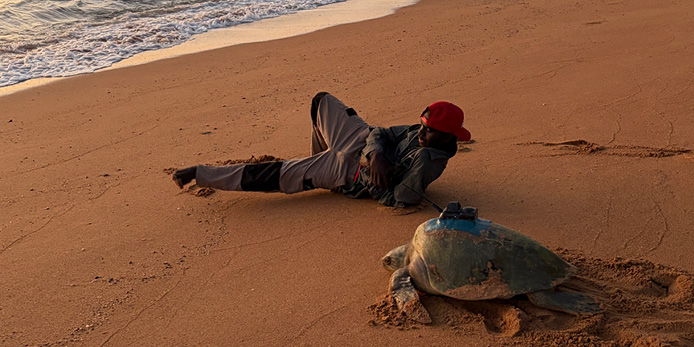
World Ranger Day recognises and celebrates the work of Rangers around the world who care for and protect lands, waters, wildlife and cultural heritage.
IMOS recognises Traditional Custodians and Elders as Australia’s first marine scientists, as well as the vital role Indigenous Rangers play in caring for sea Country through traditional knowledge, cultural practices and environmental stewardship.
Through partnerships that bring together Traditional Owner knowledge and western science, Rangers and researchers are learning from one another to better understand and protect Australia’s marine environment.
“I loved learning how to tag turtles and finding out where they go. It is really important to the relationship the sea rangers have with these important totems.”
Gerard Munumpalwuy, Crocodile Islands Ranger
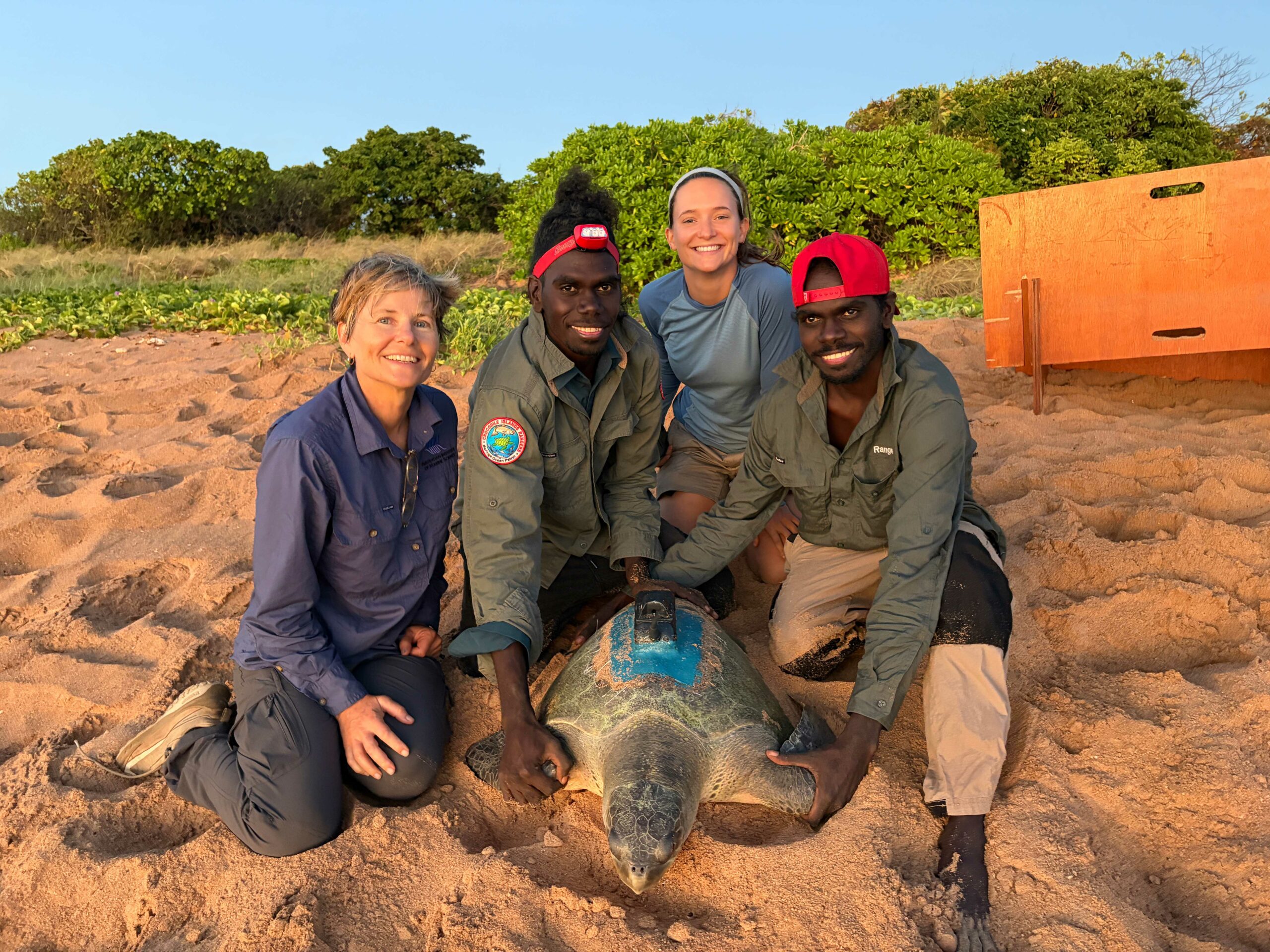
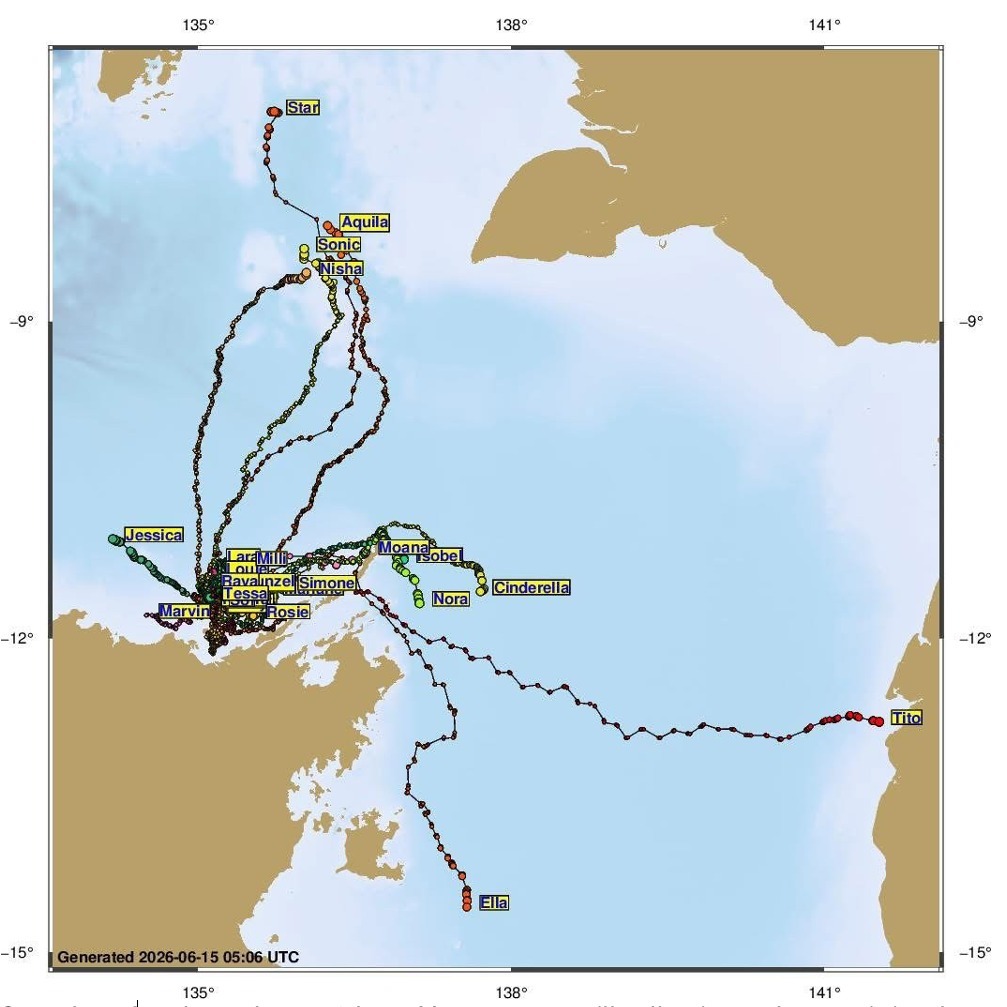
On a recent turtle tagging trip in the Crocodile Islands, the Crocodile Islands Rangers and Traditional Owners of Gurriba worked alongside researchers from IMOS, the Sydney Institute of Marine Science and the Australian Institute of Marine Science to deploy 26 satellite tags on olive ridley turtles. Tags are designed to detach naturally after approximately 10 months as turtles grow and shed the outer layers of their shell scutes.
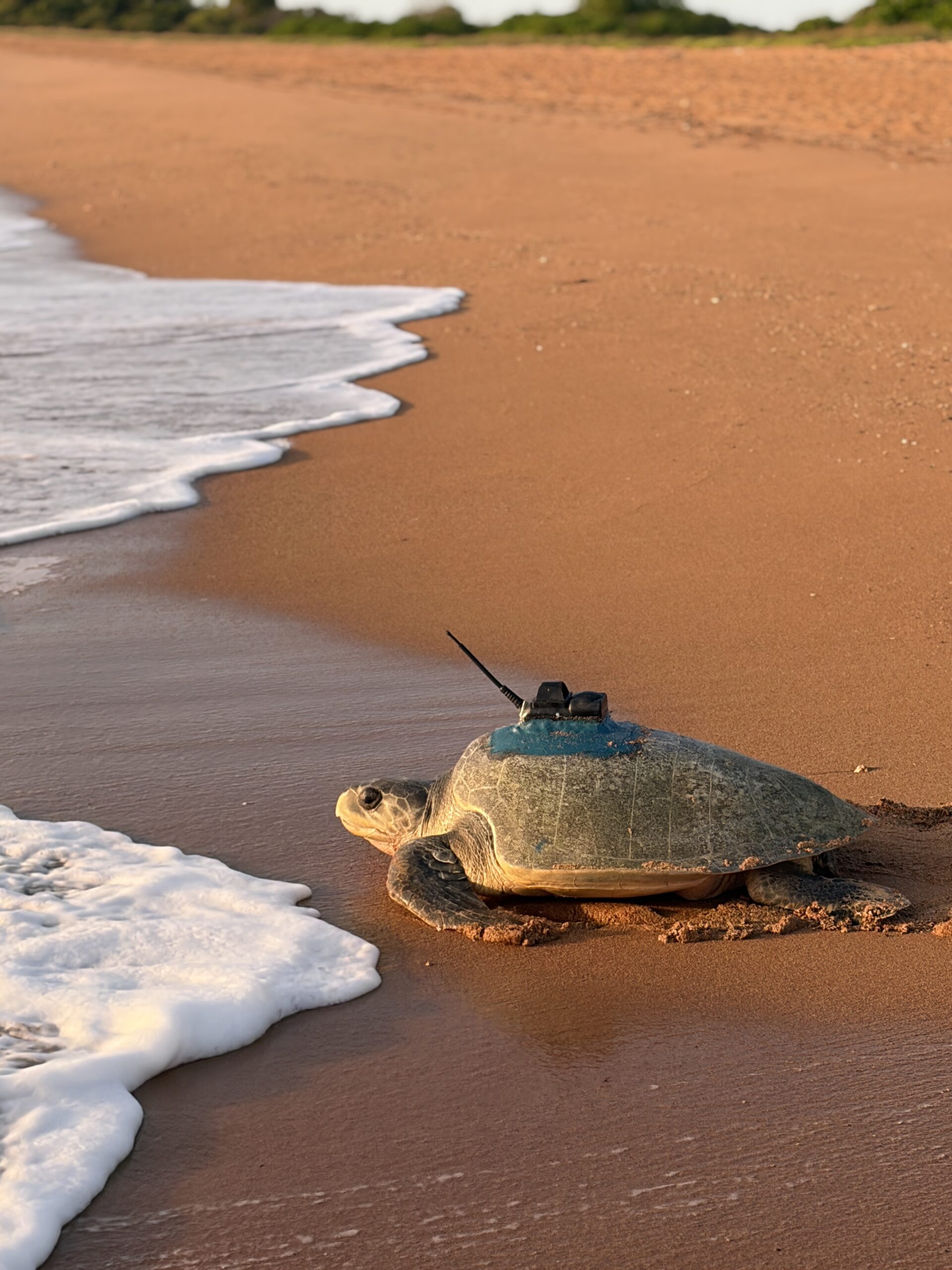
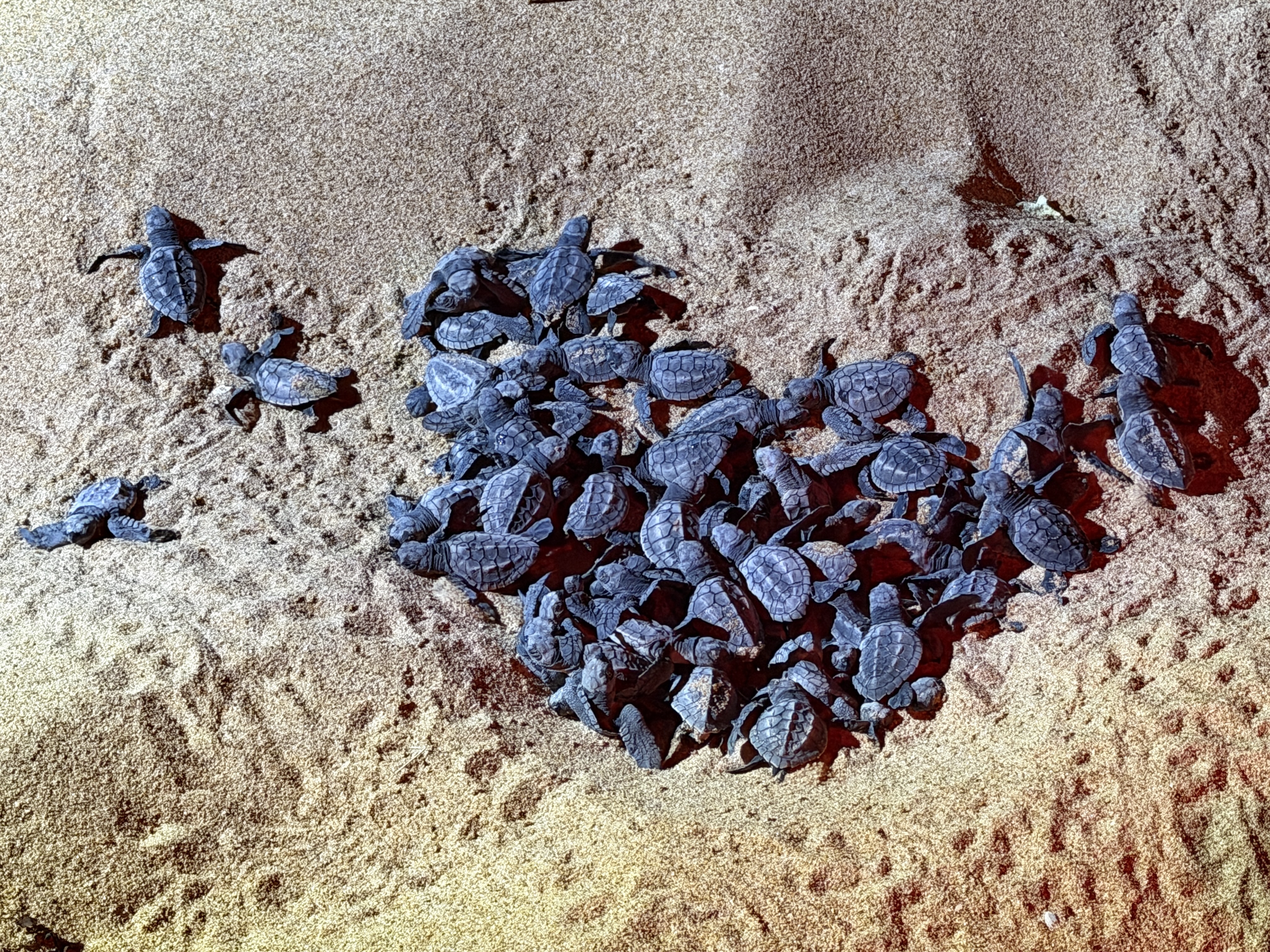
The tagged turtles will provide valuable information about their movements and habitat use while collecting ocean temperature, salinity and depth data in shallow coastal waters where observations are otherwise difficult to obtain. These observations help fill critical gaps in ocean monitoring across northern Australia, improving understanding of the ocean conditions that influence tropical cyclone intensity and supporting more accurate forecasting and early warning systems for coastal communities.
The Rangers worked closely with the researchers to find the turtles on Gurriba, and once they had completed egg laying, helped to corral and secure the turtles, assisted with attaching tags, and their safe release. The Rangers also provided essential logistical support that allowed for the successful field work at this remote island.
Gerard Munumpalwuy, Crocodile Islands Ranger, said the project provided an opportunity to learn new skills while strengthening connections to important cultural species.
A highlight of the trip was the reciprocal exchange of knowledge and the generosity of the Rangers in sharing their Traditional Ecological Knowledge, stories, and the Yolŋu language.
“This is an incredibly rewarding collaboration, exchanging knowledge and friendship with the rangers and TOs, learning about their song-lines and sitting together under the stars discussing the melding of modern and traditional scientific knowledge.”
Rob Harcourt, IMOS Animal Tagging Facility Lead
During the trip, the Crocodile Island Rangers also conducted a beach clean-up. Rangers and researchers collected around 20 large bags with rubbish, most of it being plastic debris originating from Southeast Asia.
IMOS continues to grow partnerships between researchers, Traditional Owners and Rangers, demonstrating how Indigenous knowledge and scientific monitoring can work together to better understand and care for sea Country.
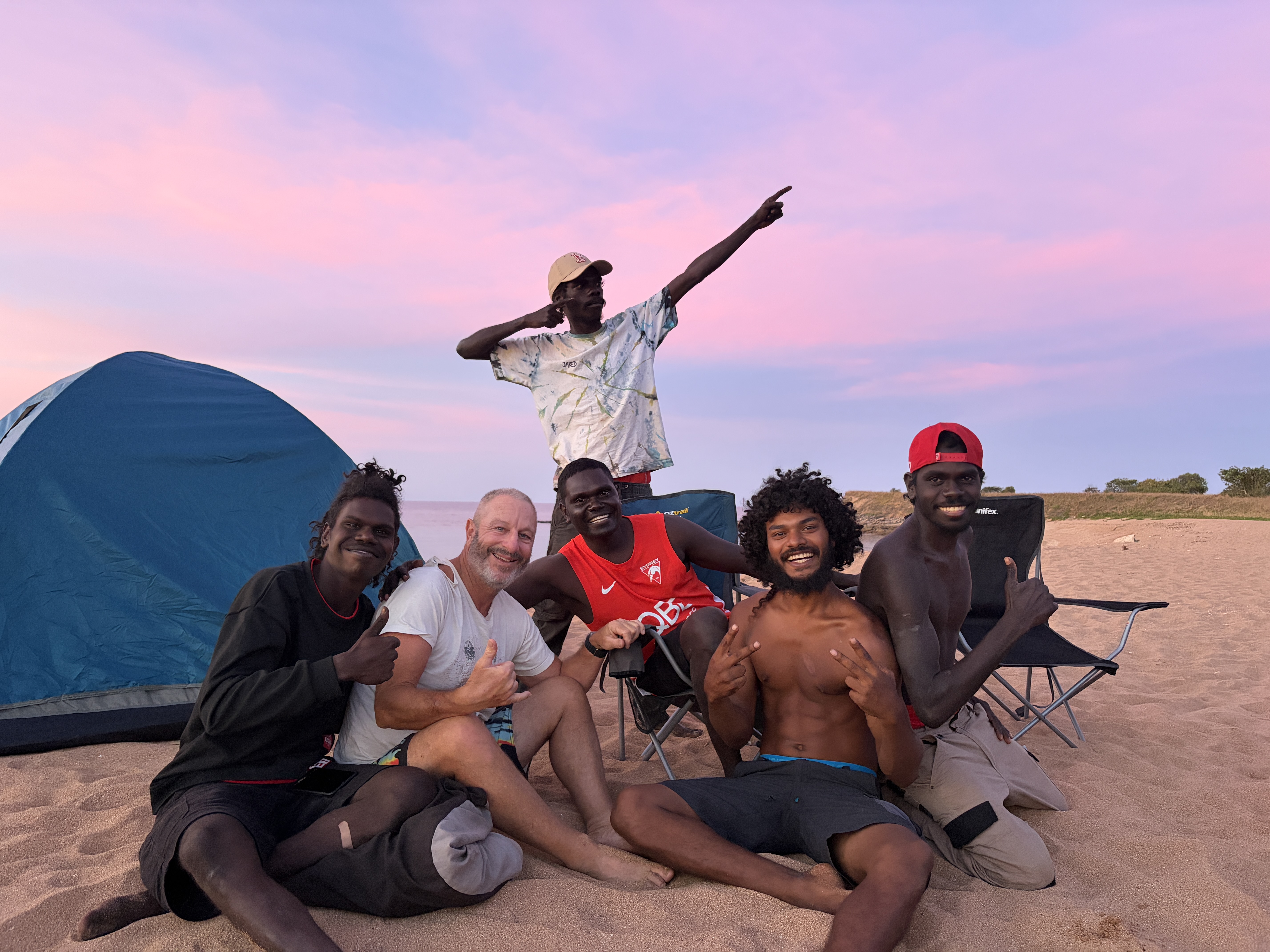
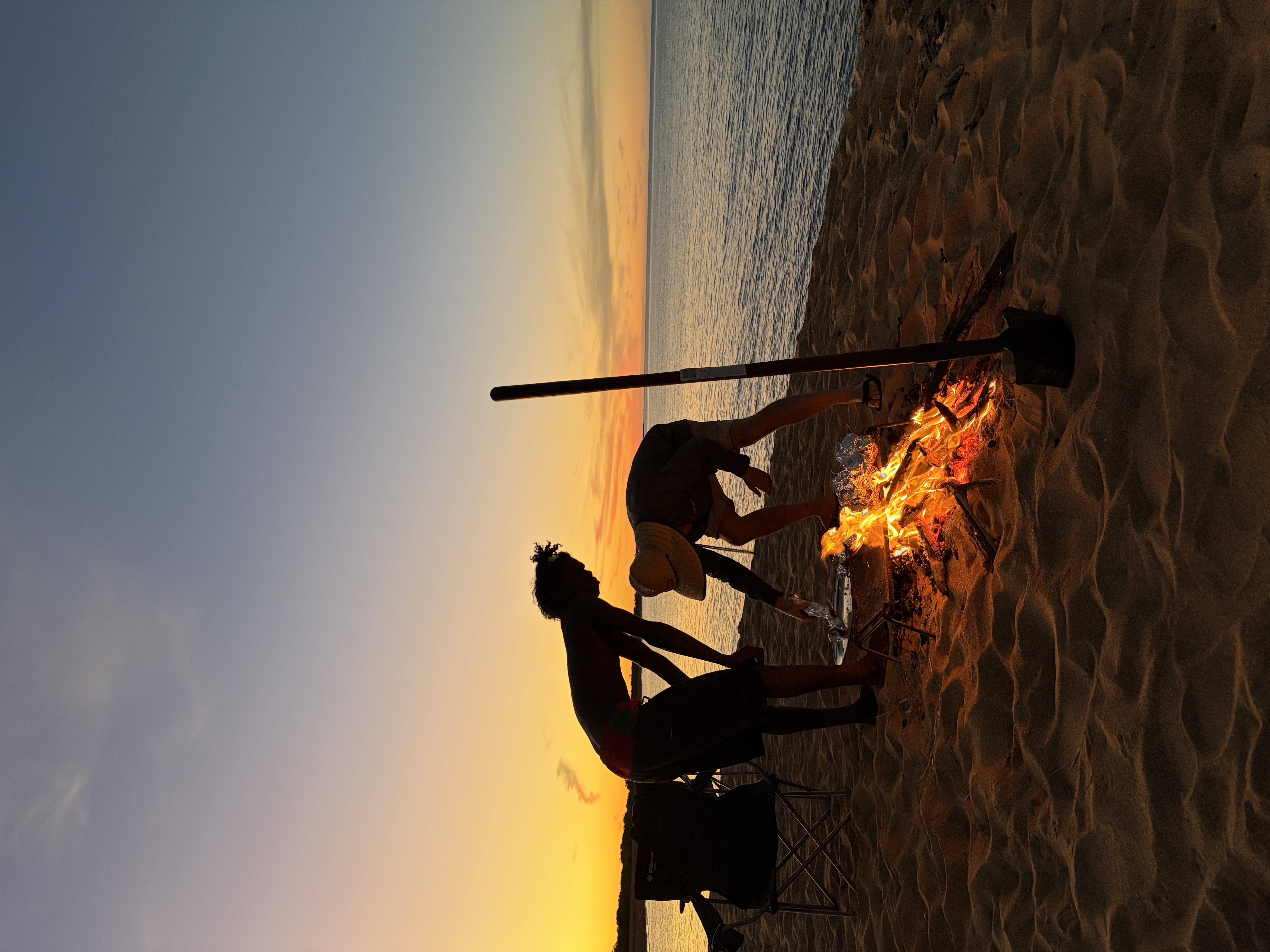
Photos of Crocodile Island Rangers Isaac, Jeremiah, Justin Gamalanga, Anton Raman, Gerard Munumpalwuy & Michele Thums (AIMS), Isobel Lerpiniere (SIMS), Rob Harcourt (IMOS). Image credit: Isobel Lerpiniere & Rob Harcourt