
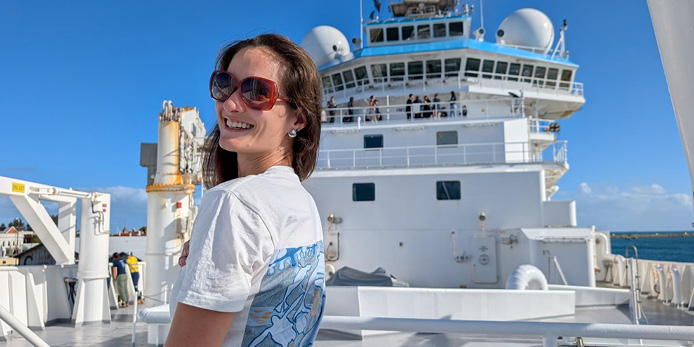
Dr Natalia Ribeiro Santos, IMOS Science Officer, recently had the incredible opportunity to serve as the Co-Chief Scientist on the CAPSTAN voyage aboard CSIRO research vessel (RV) Investigator.
CAPSTAN, the Collaborative Australian Postgraduate Sea Training Alliance Network, is a maritime education and training initiative of CSIRO, the University of Tasmania’s Institute for Marine and Antarctic Studies (IMAS) and the Australian and New Zealand International Scientific Drilling Consortium (ANZIC).
CAPSTAN is designed to bring together students from various disciplines, such as atmospheric science, biology, geoscience, and oceanography, to provide a unique platform for hands-on learning and research aboard RV Investigator, Australia’s dedicated ocean research vessel.
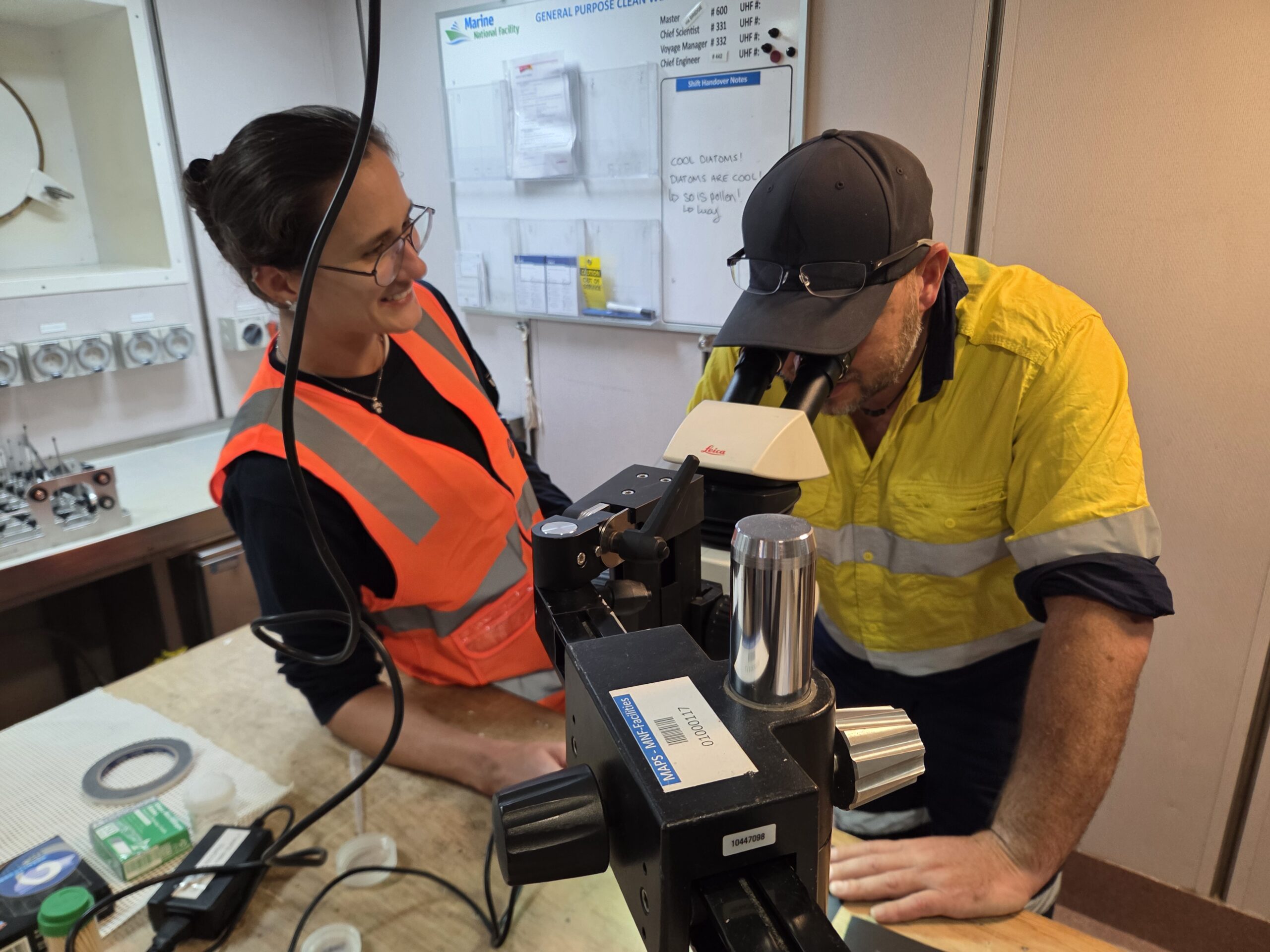
“While the primary focus was on training students, it also served as a vital learning experience for me. Understanding the intricacies of voyage planning as a Chief Scientist was an invaluable and unique opportunity for my career. This voyage allowed me to engage in high-level planning, collaborating with SARDI and CSIRO to extend our training scope by adding an extra day dedicated to science, with the aim to add to the research efforts on the persistent Harmful Algal Bloom (HAB) in South Australia.”
Natalia Ribeiro Santos
Throughout the voyage, the team deployed the Conductivity-Temperature-Depth (CTD) instrument multiple times along transect lines designed to capture cross-shelf flows through the canyons that may be the source of nutrients for HAB. The CTD measures temperature, salinity, oxygen, ocean velocity and fluorescence at different depths. Water samples collected by the bottles on the CTD were later analysed for nutrients, chlorophyll, and plankton composition, contributing to the understanding of the sea state and connectivity between the open ocean and the continental shelf in the region.
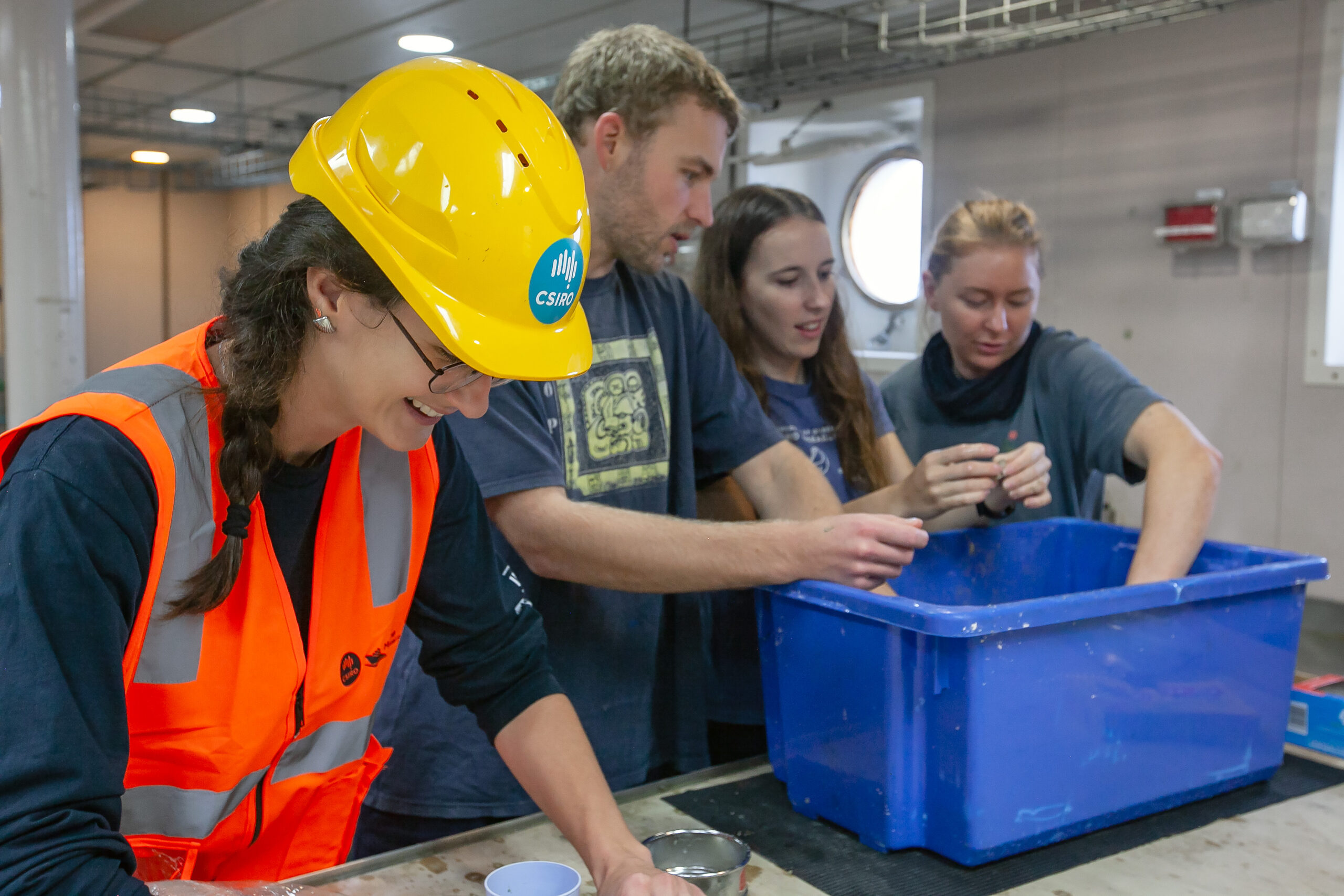
Through the donation of Expendable Bathythermographs (XBTs) from the IMOS Ships of Opportunity Facility and CSIRO, the design of a high-density XBT line mirroring the historical IX31 line was made possible, which fortuitously captured the vertical structure of an eddy of the Leeuwin Current, much to the students’ excitement.
Additionally, students were introduced to various other instruments, including a TRIAXUS, which collects similar core measurements as the CTD while being towed behind the vessel, as well as sediment grabs, and IMOS equipment such as a Continuous Plankton Recorder and an Argo float.
“The CAPSTAN voyage journey was particularly significant for me as a past sea-going physical oceanographer who has transitioned to work behind the scenes. I rarely get the chance to witness the operational aspects of the facilities funded through IMOS, directly engage in research or teaching, or go to sea.”
“Through CAPSTAN, I spent two weeks doing all of that and more. I am grateful to have experienced such a rewarding chapter in my professional journey on board the iconic RV Investigator, which has reinforced my commitment to ocean research and my belief in the power of collaboration. Back in the office, I still can feel the sea breeze as I reflect on what has been a true highlight of my career.”
Students and trainers will set sail on the next CAPSTAN voyage on RV Investigator in September 2026, which will literally have them take their training to the high seas during a 13-day voyage from Brisbane to Fiji.
Header image: Sarah Kachovich ANZIC