
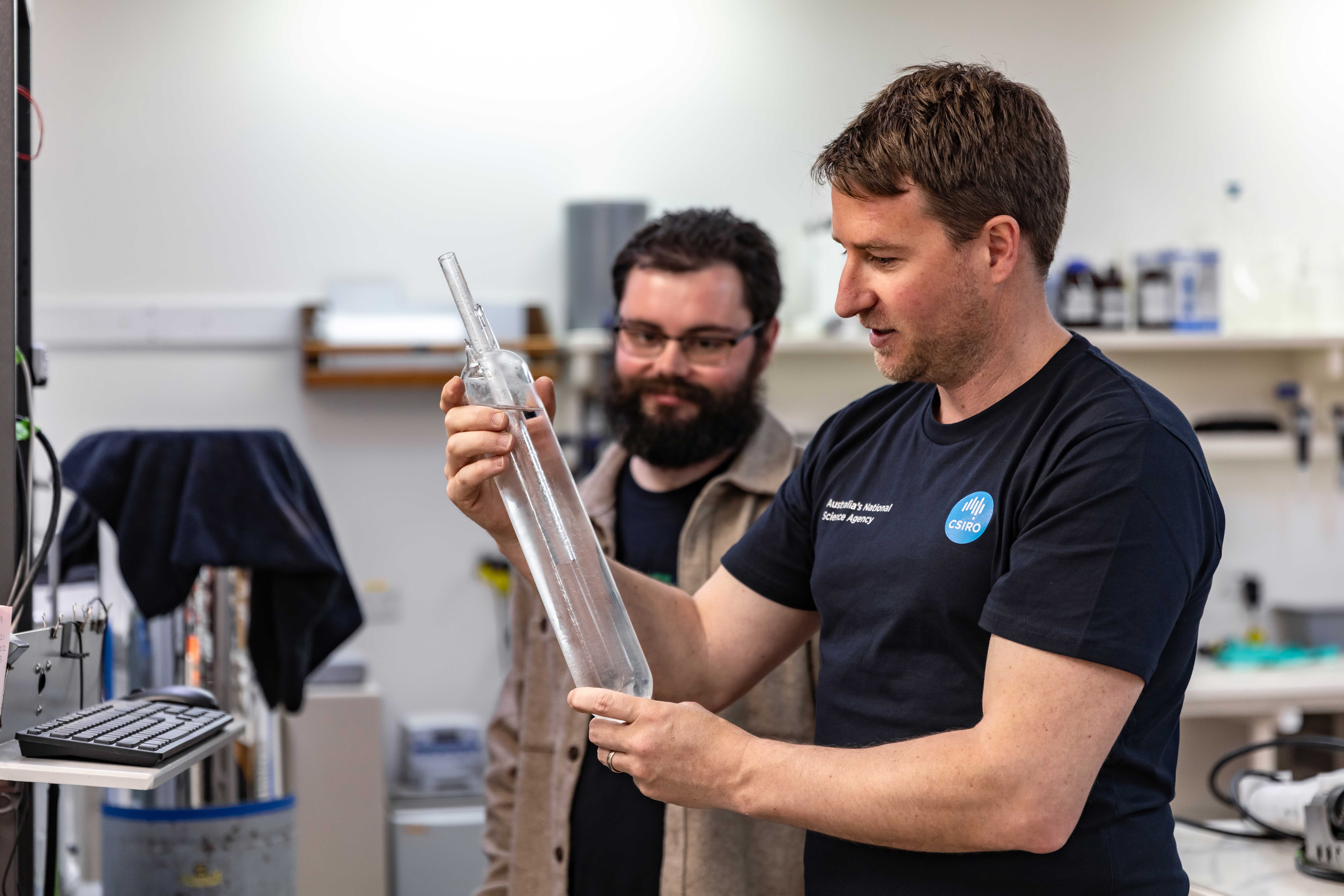
Celebrating 20 years of sustained marine observing
As IMOS enters its 20th anniversary year, the Oceanographic Calibration Facility operated by CSIRO, Australia’s national science agency, will also achieve a major milestone: the calibration of its 10,000th oceanographic instrument – the IMOS National Reference Station at Maria Island, Tasmania!
Based at the CSIRO Marine Laboratories in Hobart, Tasmania, the Oceanographic Calibration Facility (the ‘Facility’) is accredited by the National Association of Testing Authorities (NATA) to ISO 17025 standards. This is an international standard that sets the requirements for the competence, quality and reliability of testing and calibration laboratories.
Of note, it is the only facility accredited to this standard and able to deliver this extensive range of marine instrumentation calibrations in the southern hemisphere.
The Facility provides the specialised, controlled environment, measurement equipment, references traceable to international standards and expertise. Oceanographic instruments used by IMOS, CSIRO’s Marine National Facility and other clients in Australia, New Zealand and regionally, are tested, calibrated and prepared for deployment; and also undergo post-deployment calibration to quantify the gradual change in sensitivity during deployments (called ‘drift’).
Sensors used by IMOS Facilities, including the National Reference Stations, and other long-term observing platforms pass through the Facility, ensuring they meet the highest standards before entering (or re-entering) the ocean observing system.
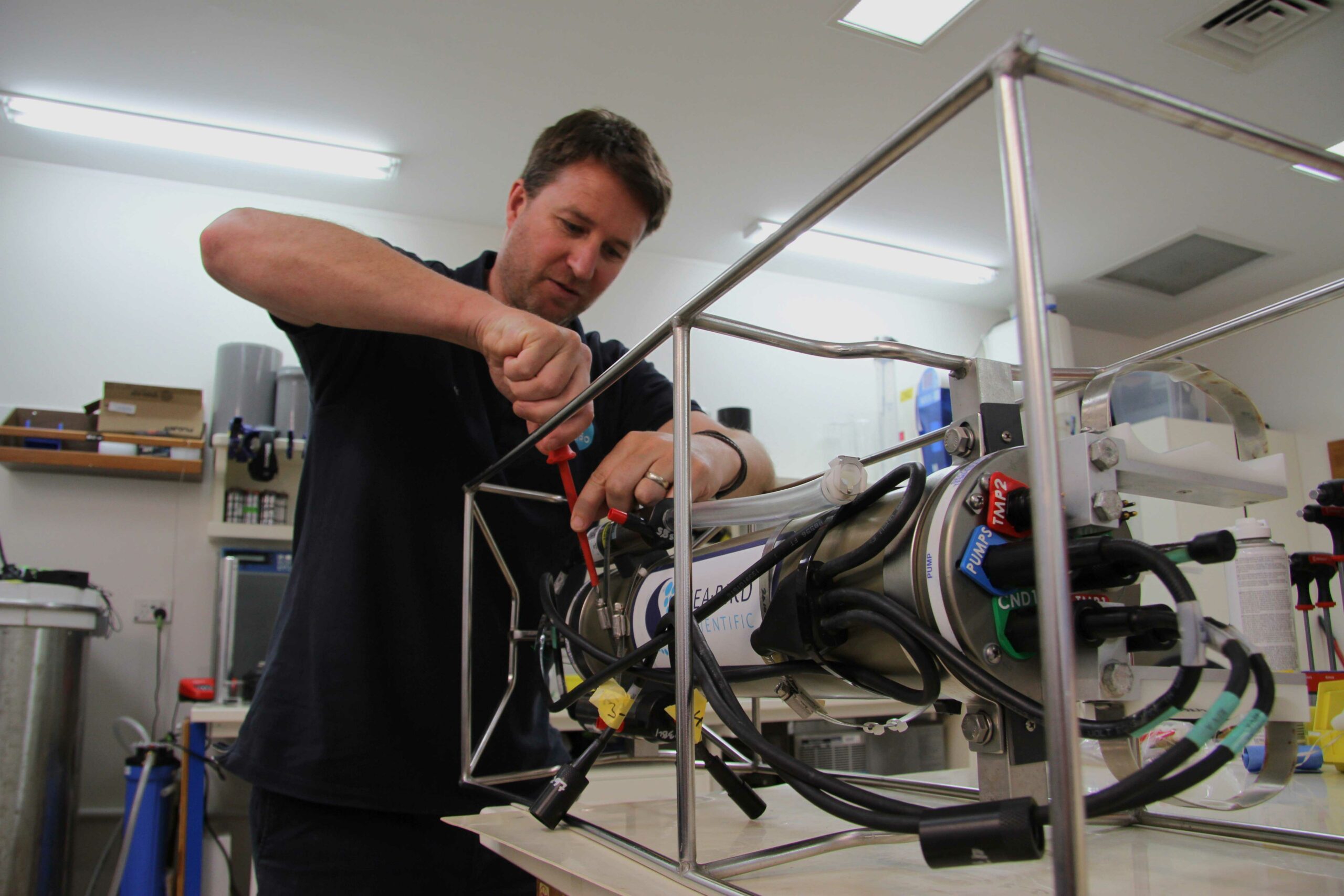
CSIRO’s Kai van den Hoff, Manager of the Oceanographic Calibration Facility, said the Facility plays a critical role in ensuring the accuracy and reliability of oceanographic measurements that underpin marine science and climate data.
“Our process begins with the meticulous calibration of sensors and instruments used in ocean observations, including Conductivity-Temperature-Depth (CTD) sensors and other oceanographic equipment,” Kai said.
“Each instrument undergoes rigorous verification against traceable standards to maintain compliance with ISO/IEC 17025, ensuring global confidence in the data produced.”
Calibration of each instrument involves several key steps:
- Instrument Receipt and Inspection: Verifying identification, condition, and documentation.
- Reference Standard Comparison: Using certified standards to adjust and validate instrument readings.
- Uncertainty Analysis: Calculating and documenting measurement uncertainty for transparency and scientific integrity.
- Certification and Documentation: Issuing calibration certificates that confirm traceability to standards, and further analysis of instrumentation performance.
Why accuracy is important
Accurate oceanographic data is essential for understanding climate, ocean circulation, and marine ecosystems. Even tiny errors in salinity or temperature measurements can lead to significant inaccuracies in climate models and resource management decisions.
By maintaining a world-class calibration facility in Hobart, we support Australia’s leadership in marine science and ensure that data collected from our oceans meets the highest standards of precision and reliability.
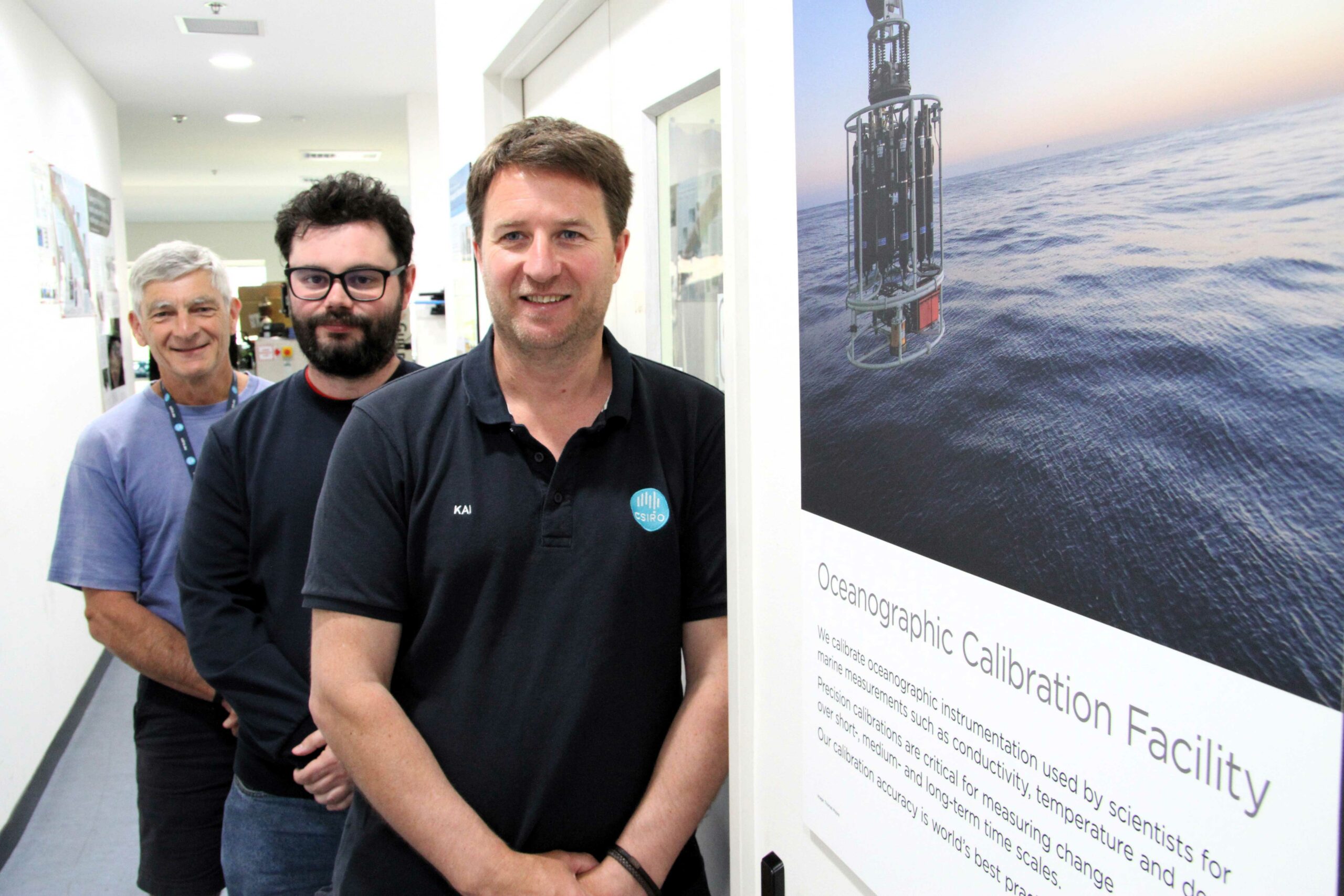
Reaching the 10,000th instrument mark highlights Australia’s sustained investment in reliable, long-term marine research infrastructure. A key part of this infrastructure is the centralised calibration of IMOS instruments at CSIRO Marine Laboratories in Hobart, using common procedures, and internationally recognised references. This ensures ocean measurements collected around the country, from northern Australia to the Southern Ocean, are consistent and comparable over time and with measurements made by researchers in all other nations.
This centralised approach strengthens the scientific value of long-term IMOS datasets and underpins the continuity and reliability of the National Reference Stations, which track changes in marine ecosystems, climate and biogeochemical processes over periods of decades.
“One of IMOS’s greatest strengths is being a trusted provider of accurate, high-quality data. The CSIRO Oceanographic Calibration Facility team is critical to ensuring the accuracy of oceanographic measurements that underpin the many applications of these data. We are lucky to have this capability in Australia.”
Michelle Heupel, IMOS Executive Director
A national calibration service supporting real-world decision-making
The Facility calibrates Conductivity–Temperature–Depth (CTD) instruments along with dissolved oxygen, optical, turbidity and other oceanographic sensors from a wide range of manufacturers. A full calibration typically takes one week, and each instrument is returned with a comprehensive calibration report.
Conductivity, temperature and pressure sensors are the primary tools used by scientists to measure ocean conditions and are calibrated to extraordinary accuracy in the Calibration Facility – temperature calibration is typically within 0.0015ºC, for example. Precision measurements of ocean physics are critical to understanding how both coastal environments and deep ocean systems are changing over short, medium and long time-scales.
Supporting Australia’s understanding of a changing ocean
The high-quality calibrated data collected by these instruments have direct impacts on society. They are used to:
- monitor marine heatwaves and long-term ocean warming
- support fisheries and aquaculture planning
- inform marine park and coastal zone management
- improve weather and climate prediction
- detect ecosystem and water-quality changes
As IMOS marks 20 years of observing Australia’s changing oceans, the calibration of the Facility’s 10,000th instrument represents a significant scientific and national capability milestone, celebrating the people, infrastructure and partnerships that ensure Australia continues to measure its oceans with world-leading accuracy.
Featured image by CSIRO, Dearna Bond