
A wave buoy deployed off Wilsons Promontory as part of the IMOS Coastal Wave Buoys Facility has completed an unexpected journey across the Tasman Sea, sparking a unique classroom connection between coastal scientists and schoolchildren at Halfmoon Bay School.
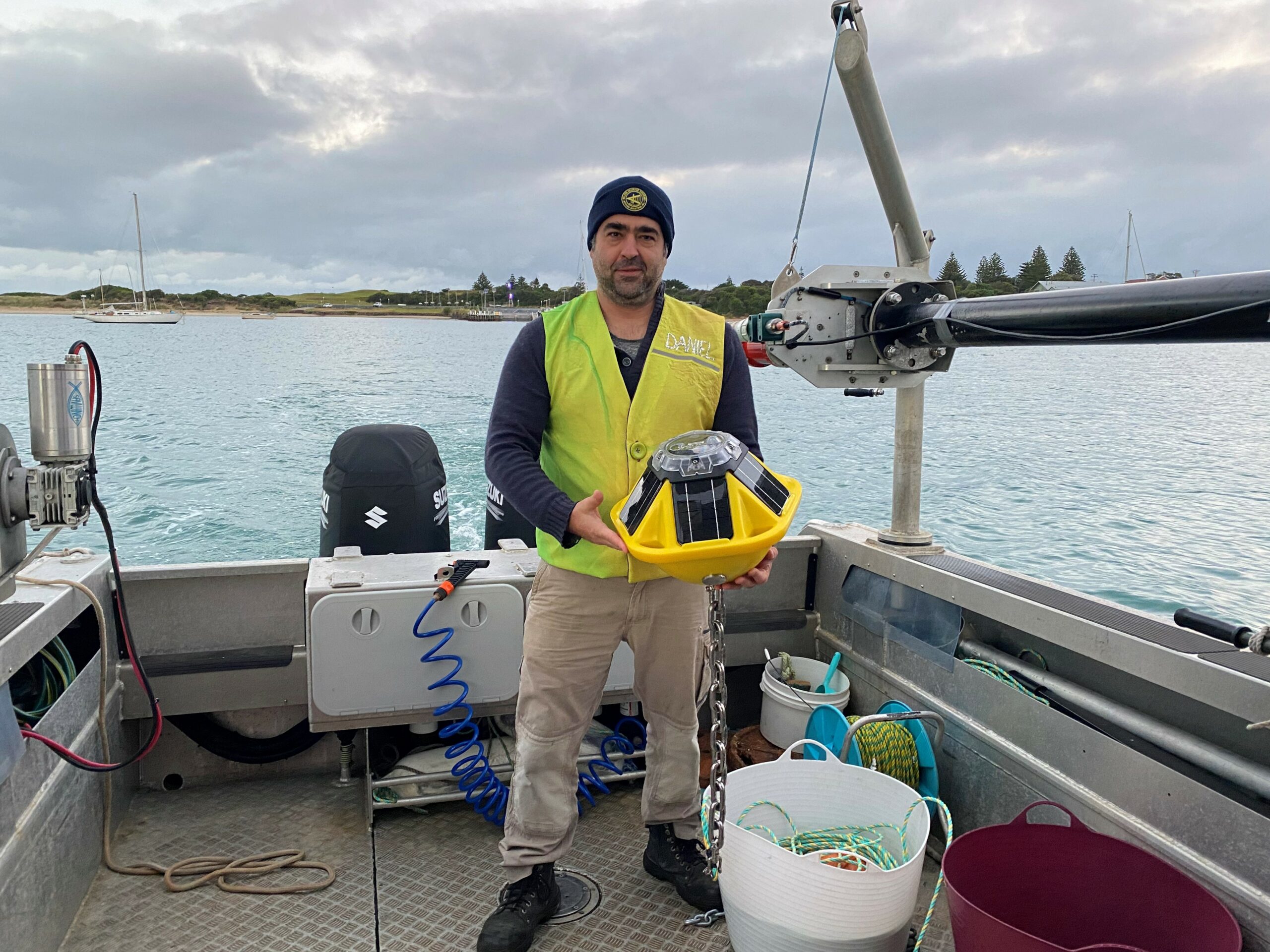
The Sofar Spotter wave buoy, deployed as part of the near-shore coastal observing infrastructure operated by IMOS Coastal Wave Buoys Facility, supported by Deakin University in Victoria, was located 45km south of the most southern point of mainland Australia off Wilsons Promontory. The wave buoy broke free from its moorings in late 2024 after a significant storm event. Once offshore, the buoy became caught in one of the large anticyclonic eddies that spin off the East Australian Current (EAC) — part of the powerful system of gyres that circulate warm water through the Tasman Sea. Despite multiple retrieval attempts, the sensor unit exited Bass Strait via the Bass Canyon entering the EAC and its GPS track was captured in imagery showing a voyage down the current and then eastwards across the Tasman until growth on its solar panel depleted its battery levels and communication was lost.
Following months of silence, the buoy re-established communication and transmitted data and location again in October 2025 on the shores of Stewart Island, south of New Zealand. (>3000 km from was originally deployed).
“The remarkable journey of the Wilsons Promontory wave buoy highlights the versatility of these sensors. They can collect critical ocean data whether anchored or drifting. Strong westerly winds and harsh Southern Ocean weather likely carried the buoy south of New Zealand, an area known for some of the largest waves ever recorded in the Southern Ocean,” said Dr Salman Khan (CSIRO), leader of IMOS Satellite Remote Sensing Surface Waves sub-Facility.
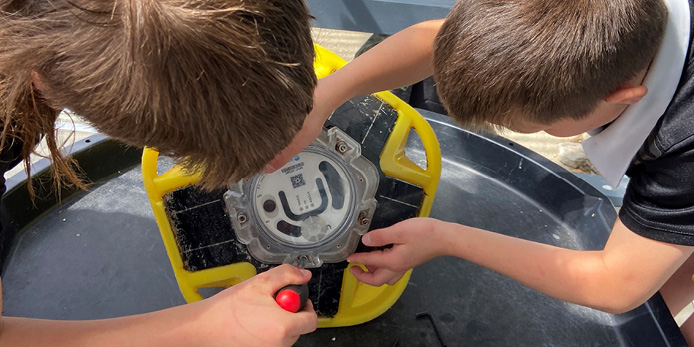
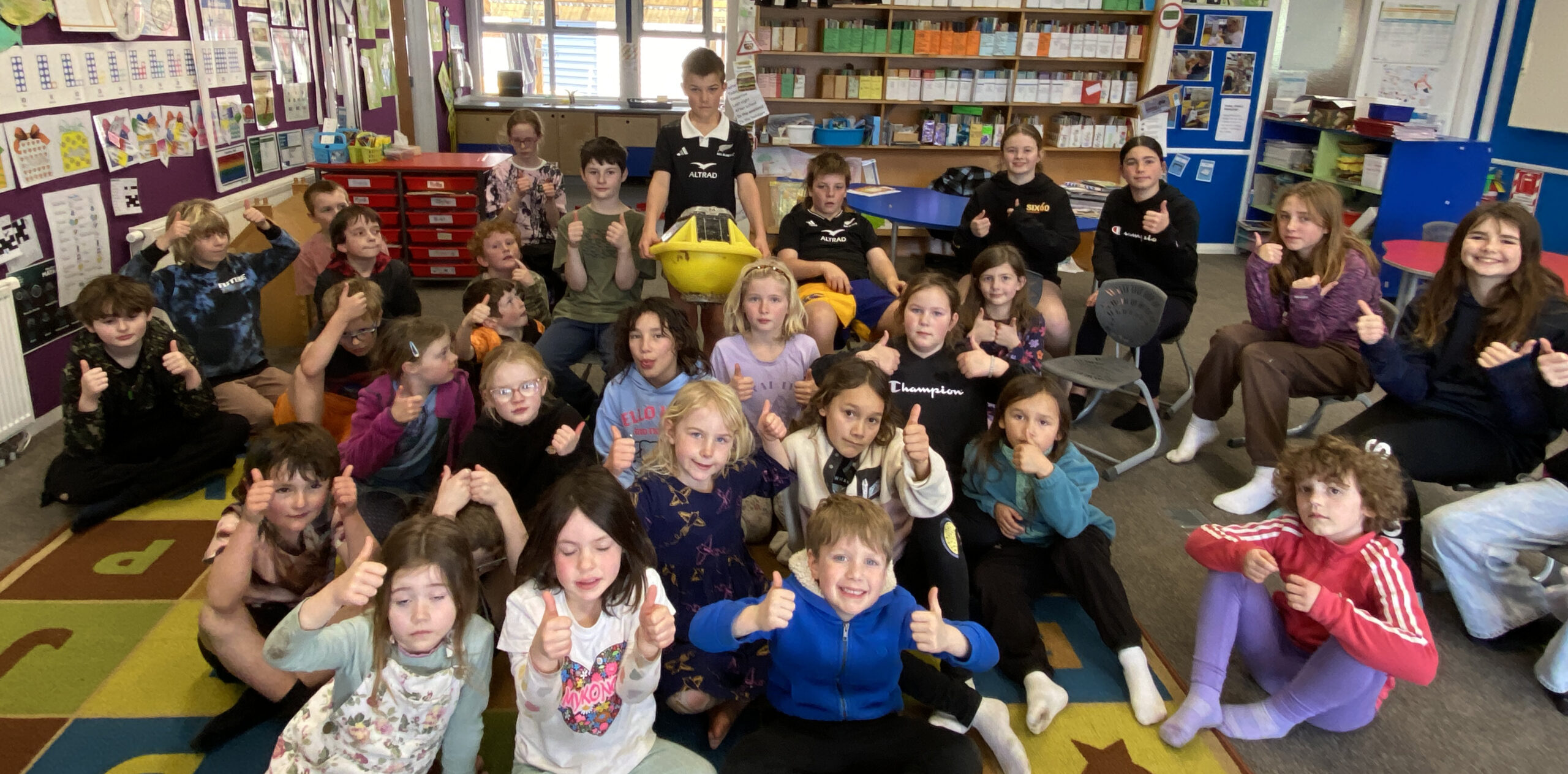
Within 24 hours a local fisher Ty Jenkinson volunteered to recover the device. The buoy then made its way to Halfmoon Bay School where a class dialled in to Deakin Marine facilities at the Warrnambool Campus where students went on a virtual tour, before guiding them to open the wave buoy and turn off the unit.
“Our students were super excited to hear about the journey the wave buoy went on, and how it was brought back to Halfmoon Bay by one of our student’s dad, who is also a fisherman.”
Alison Fitzsimons, Junior Room Teacher at Halfmoon Bay School / Te Kura o Rakiura
“It’s a wonderful reminder that ocean science connects people across vast distances,” said Professor Daniel Ierodiaconou, Lead Scientist for CoastRI. “From Wilsons Promontory to Stewart Island, this buoy has shown how the ocean links our two nations – not just physically, but through curiosity and collaboration.”
This serendipitous journey also highlights the broader national initiative led by IMOS. The IMOS Coastal Wave Buoys Facility has deployed 23 new buoys around Australia, complemented by 37 partner-deployed units, creating a coast-spanning network of near-real-time wave and sea-surface temperature data. “While the IMOS Coastal Wave Buoy Facility focuses on sustained observations from moored wave buoys, this unexpected dataset highlights the potential application for drifting wave buoys, “said the Facility lead Dr Mike Cuttler from the University of Western Australia.
“IMOS Coastal Wave Buoys, a key investment of the CoastRI initiative, is enabling unprecedented access to high-quality data that’s essential for forecasting hazards, guiding sustainable development, and protecting the ecosystems and communities that depend on our dynamic coastal zone,” said Professor Daniel Ierodiaconou.
The Wilsons Promontory buoy is one of several operated within the IMOS Coastal Wave Buoys Facility that has developed a public facing page at auswaves.org, which collates national wave-buoy data and presents it in a user-friendly portal for researchers, planners, industry and the community.