
Category: IMOS
-
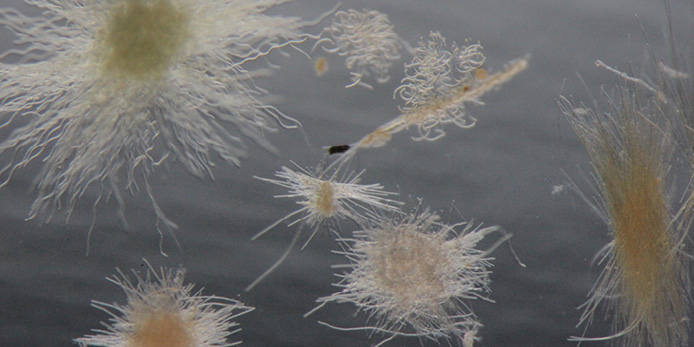
Long-term observations reveal increasing Trichodesmium in Australian waters
Long-term observations collected through the IMOS National Reference Stations (NRS) Facility are helping researchers uncover changes in one of the ocean’s most important nitrogen-fixing organisms. Trichodesmium is a filamentous cyanobacterium that converts nitrogen from the atmosphere into a form that can be used by other organisms. This makes it an important part of nutrient cycling,…
-
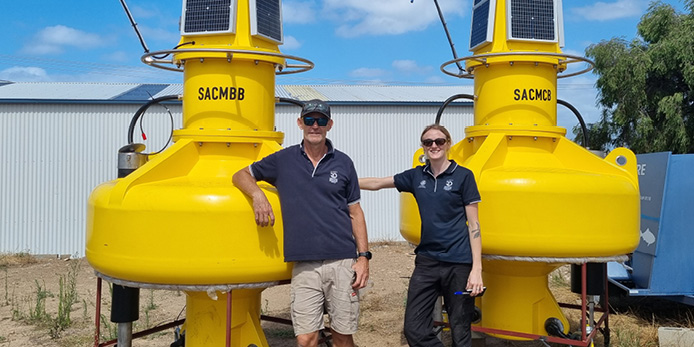
South Australian coastal mooring data now available in the IMOS Australian Ocean Data Network
Near real-time observations from South Australia’s Harmful Algal Bloom coastal monitoring network are now available through the Australian Ocean Data Network, expanding the data available through the IMOS Estuarine and Coastal Moorings Facility. Federal and state government funding has enabled the South Australian Research and Development Institute (SARDI) to install the current South Australian Harmful…
-
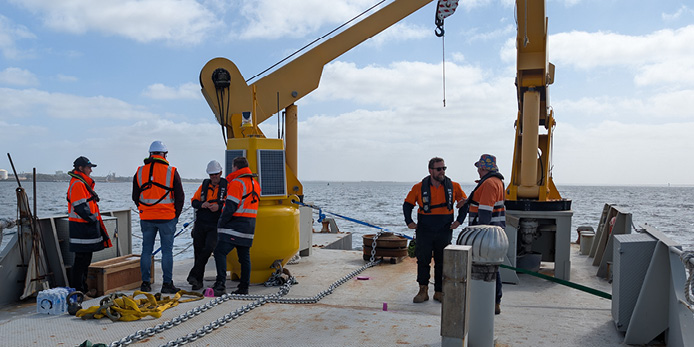
New IMOS moorings strengthen coastal water quality monitoring in Victoria
Two new IMOS Estuarine and Coastal Moorings will be deployed in Western Port Bay and Corio Bay, to establish a coordinated network of water quality observations across Australia’s coastal and estuarine environments. Deployed by Deakin University, in collaboration with the Environment Protection Authority Victoria, Port of Hastings Corporation and Melbourne Water, the new moorings will…
-
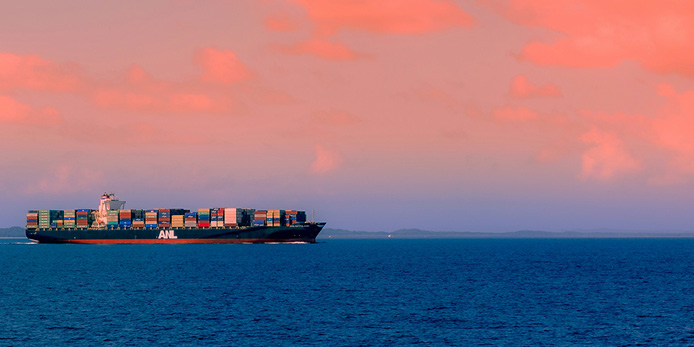
Mapping vessel traffic across Australia’s oceans
Australia’s waters host some of the busiest shipping routes in the southern hemisphere, with thousands of vessels moving through coastal and offshore regions each year. The Australian Maritime Safety Authority (AMSA) captures this activity through its national Automatic Identification System (AIS) network, generating a vast dataset of vessel movements, now exceeding 200 million records. Despite…
-
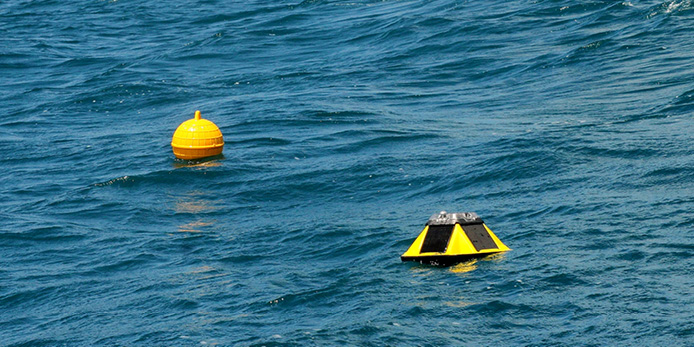
Building a national picture of Australia’s coastal waves
Waves are a fundamental component of the ocean–atmosphere system, transporting energy and momentum across the ocean and playing an important role in understanding climate variability. Accurate observations of coastal waves are critical for understanding and predicting coastal processes. Wave measurements are used to develop, validate and improve numerical models, support hazard forecasting and data assimilation,…
-
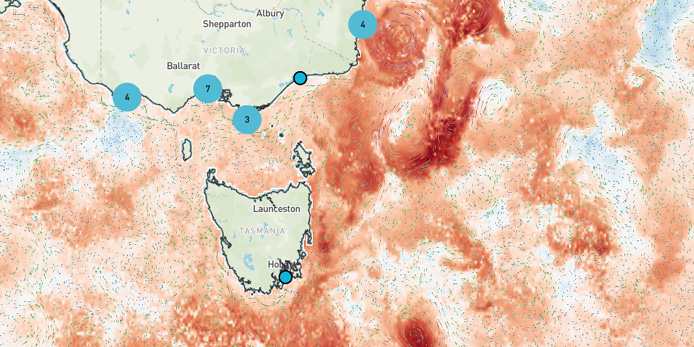
IMOS Live upgraded
IMOS has launched an updated version of IMOS Live, introducing new data streams and additional layers from our near real time moorings. With this release, users can track sea surface temperatures and anomalies via the IMOS AusTemp product, a revised suite of ocean heating indicators. Users can also display hourly temperature and salinity at different…