
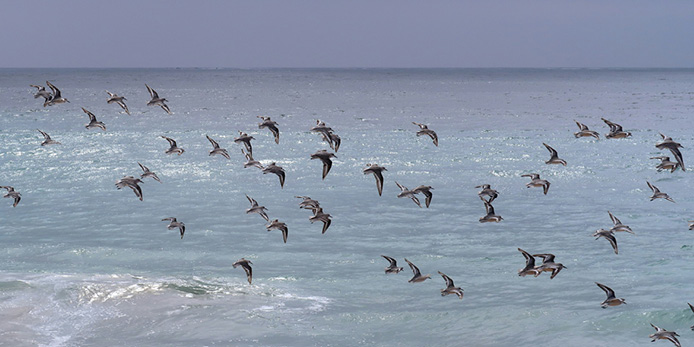
Seabirds are among the most wide-ranging animals on the planet, travelling vast distances across oceans and connecting marine ecosystems across regions and hemispheres. Understanding where seabirds occur, how their distributions change over time, and how they respond to environmental pressures is critical for marine conservation and ecosystem management.
As part of the National Environmental Science Program (NESP) Marine and Coastal Hub Project 5.9, IMOS AODN data engineers have developed a new assessment-ready seabird dataset that brings together observations from multiple sources into a single, accessible resource.
The dataset combines more than 120,000 records sourced from 41 datasets hosted through the CSIRO-hosted Ocean Biodiversity Information System Australia (OBIS Australia). It spans historical and contemporary monitoring programs, unifying ship-based visual surveys, voyage watch observations, historical ship logs and animal-borne tracking data.
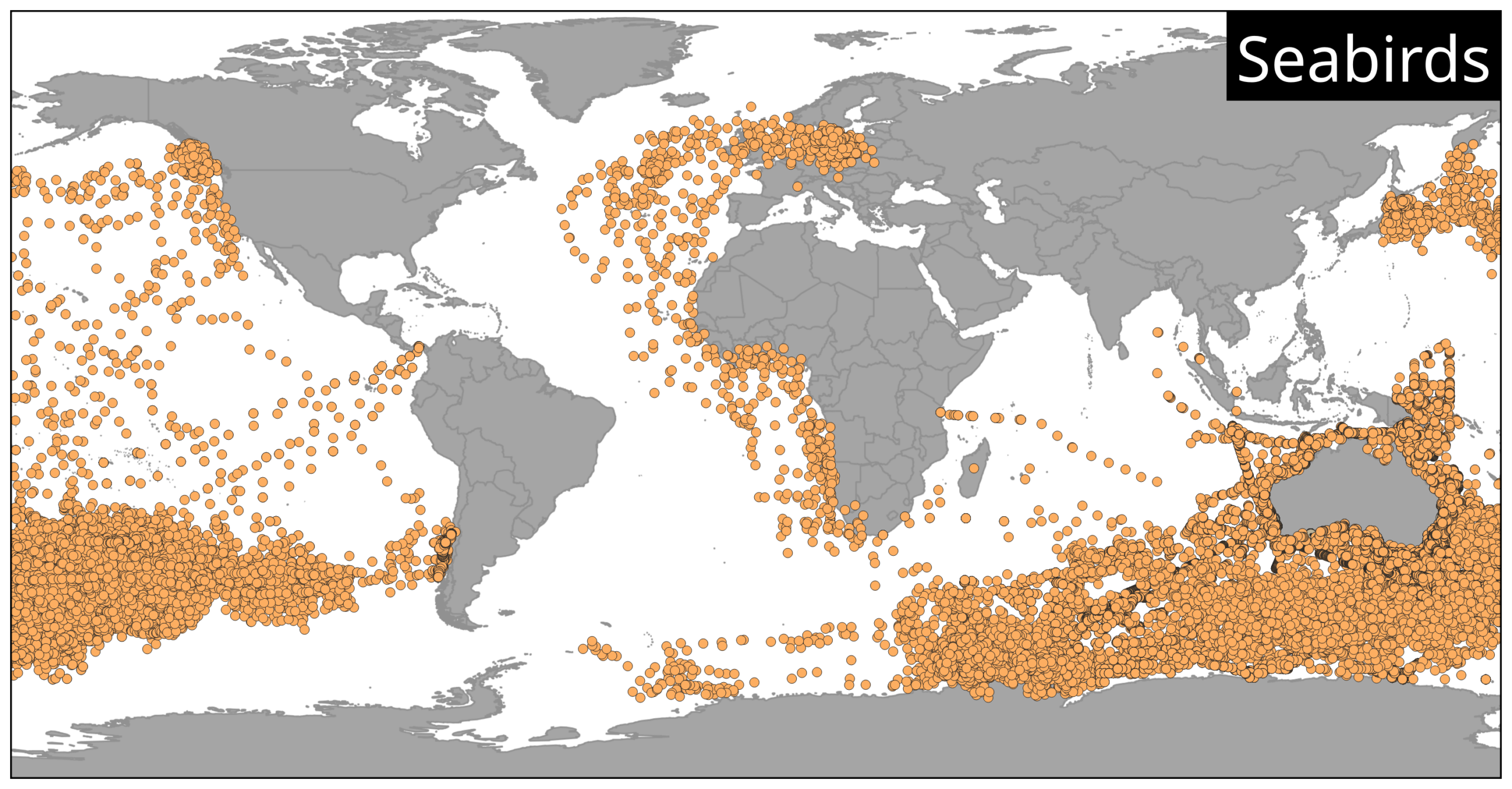
The collection includes observations from research voyages aboard vessels such as Investigator, Falkor, Franklin, Southern Surveyor and Aurora Australis, alongside digitised historical records that extend the dataset’s temporal coverage back several decades.
The product focuses on marine-associated bird species, particularly seabirds such as albatrosses, petrels, shearwaters, gulls and terns. While the geographic coverage is centred on Australian waters and the Southern Ocean, it also includes records from the wider Australasian, Indo-Pacific and sub-Antarctic regions, reflecting the extensive movements of many seabird species.
To improve usability, records from the contributing datasets have been standardised using internationally recognised biodiversity data standards and aligned to a consistent taxonomy. The dataset has also been enhanced with H3 spatial indexing and Australian Marine Region tags, allowing users to efficiently filter, aggregate and analyse observations across different marine regions and spatial scales.
The assessment-ready dataset is available through the AODN Portal and can be accessed in cloud-optimised formats for efficient analysis. To support users, IMOS has also developed companion workflows in both R and Python, alongside video tutorials that guide researchers, managers and policy-makers through data access and analysis.
By bringing together decades of seabird observations into a single, standardised resource, the dataset provides an important foundation for biodiversity assessments, conservation planning and long-term monitoring of Australia’s marine environment.