
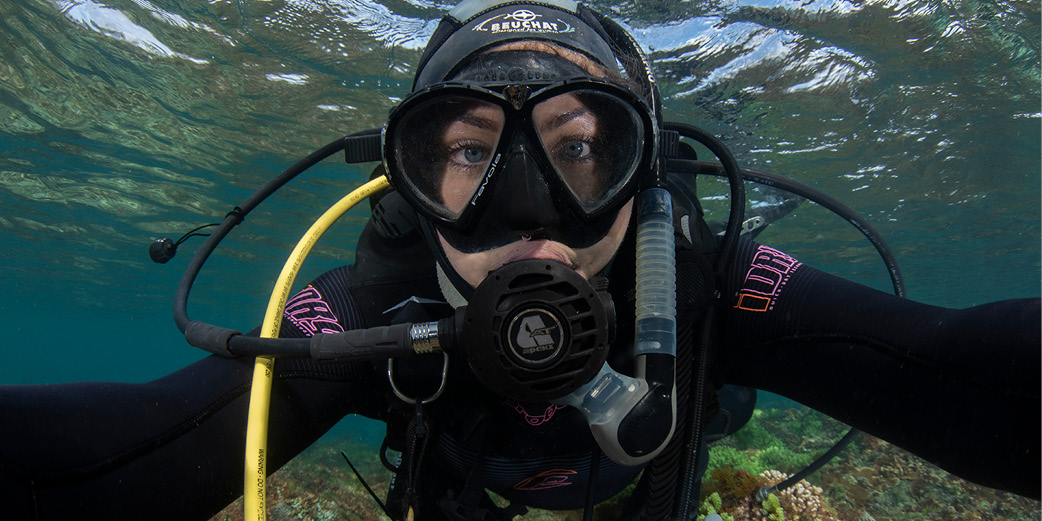
The United Nations International Day of Women and Girls in Science is on the 11th February. Join us as we celebrate the inspiring women scientists of IMOS and get to know Miwa Takahashi and Antonia Cooper.
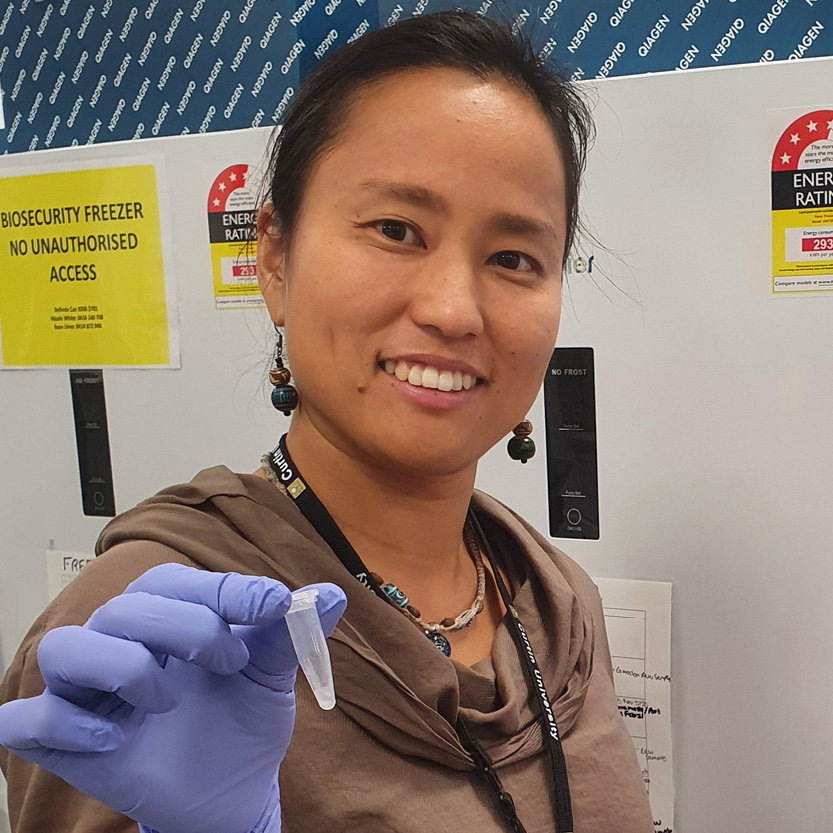
Miwa Takahashi
Who are you and what is your role in IMOS?
I am a marine biologist and molecular ecologist, working with DNA shed by organisms into the environment (known as environmental DNA, or eDNA) to understand ecosystem health. I lead the IMOS Environmental DNA sub-Facility, establishing long-term monitoring of marine macro-organisms (such as fish, other vertebrates, and invertebrates) using eDNA across Australian waters.
What drew you into the world of science?
I did my first scuba diving when I was 13 and fell in love with the beautiful underwater world. So I studied marine biology to understand how the ecosystems work and to keep them healthy – something all life on our planet depends on. That motivation has never changed.
What’s the best part about being a scientist?
Earlier in my career, my work took me diving in incredible places around the world. Now, my role is more office-based with several domestic and international trips for conferences and meetings. What I love most is working with like-minded people, both in my office and globally, and tackling challenging projects together for environmental conservation.
What would you say to young girls and women thinking about being a scientist?
The world needs curious, thoughtful, and diverse scientists more than ever. You don’t need to have it all figured out. Follow your curiosity, and your path will take shape along the way!
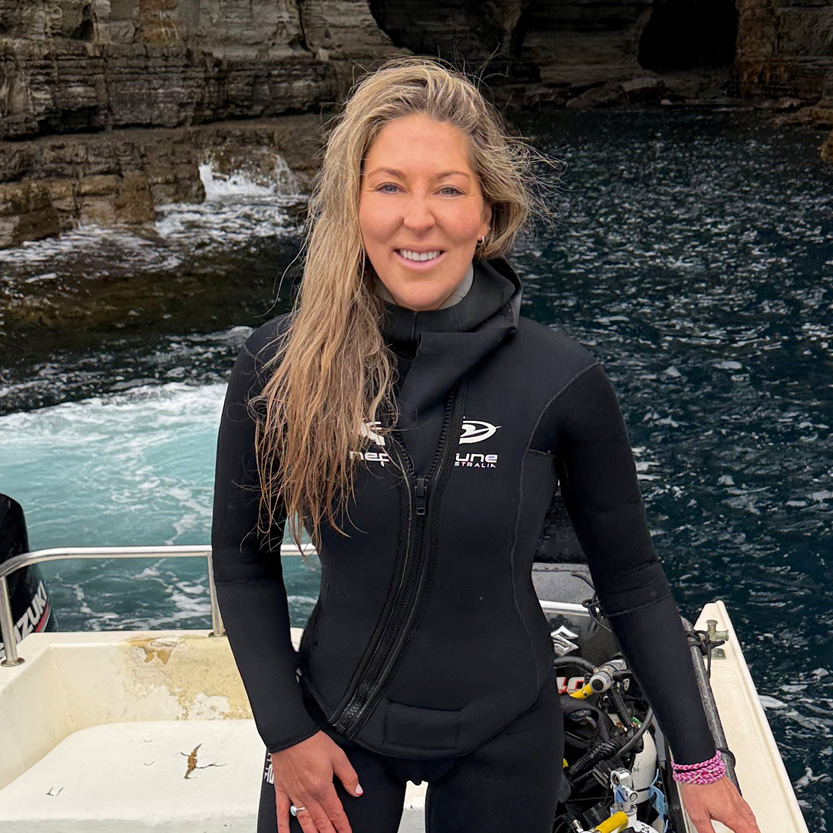
Antonia Cooper
Who are you and what is your role in IMOS?
My name is Antonia Cooper and I am the sub-Facility leader for the IMOS National Reef Monitoring Network (NRMN) sub-Facility. The NRMN database is the largest diver‑collected marine biodiversity dataset in the world. It brings together decades of standardised underwater visual survey data collected by highly trained scientific and citizen‑science divers across nearly 5,000 sites in 59 countries and territories.
What drew you into the world of science?
I’ve always felt deeply connected to the ocean. Growing up on a small island, the sea shaped my daily life and taught me early-on to respect its power and complexity. That constant presence naturally sparked my curiosity about how marine systems function and why they matter. As I got older, those questions became more urgent.
Even within my own lifetime, I’ve watched the ocean around me change, sometimes subtly, sometimes dramatically, but always in ways that reflected broader environmental and philanthropic pressures. Seeing those shifts firsthand made marine science feel like an obvious path. It offered a way to understand these changes, and a way to contribute meaningfully by helping share that knowledge, and support solutions that protect the ecosystems I care deeply about.
My continued love of science and the ocean drives my curiosity to understanding our changing seas to help safeguard them for the future.
What’s the best part about being a scientist?
What makes being a scientist especially meaningful to me is the chance to bring the vibrant, often overlooked, world beneath the surface into focus. I get to translate what I see underwater into data, and then help interpret what those numbers mean in the broader context of marine systems. It feels like the best job in the world: turning curiosity and observations into knowledge that can inform our understanding and management of the ocean.
Fieldwork is particularly rewarding, whether I’m surveying new locations and encountering unfamiliar species, or returning to long‑term monitoring sites I’ve visited for decades. These repeated observations help to detect ecological changes as they unfold and contextualize them within broader environmental trends. Much of our marine life exists out-of-sight and is therefore often out-of-mind, so being able to document the complexity and variability of underwater communities, and contribute to evidence‑based understanding of how these systems function and change, is incredibly fulfilling. It’s a privilege to generate knowledge that supports both science and conservation, and to help make invisible ecosystems visible in meaningful ways.
What would you say to young girls and women thinking about being a scientist?
The ocean is huge and so are the opportunities. Marine science is incredibly diverse, and its strength comes from people who bring different skills, perspectives, and ways of thinking. If the ocean inspires you, there is a niche that can fit your interests, whether that’s hands‑on fieldwork, laboratory research, policy, conservation, modelling, education, or community engagement.
Most importantly, surround yourself with people who support your interests, seek mentors who inspire you, and keep showing up with curiosity. Marine science is an exciting, evolving field, and the challenges facing our oceans need fresh ideas, new energy, and diverse voices.
We need more young women ready to explore, to ask bold questions, and to help shape the future of our oceans. If this is where your passion is, there is absolutely a place for you here.
Featured image by Antonia Cooper, UTAS