
For more than 20 years, the IMOS Australian Ocean Data Network (AODN) has been helping turn Australia’s ocean observations into accessible, trusted and reusable information.
The IMOS AODN brings together marine data from across Australia, connecting observations from platforms including moorings, autonomous vehicles, satellites and animal-borne instruments.
Today, the network provides access to more than 300 data collections and manages 88 TB of data containing more than 1.5 billion measurements. More than 15,000 metadata records help users discover data from IMOS and partner organisations.
From data repository to digital marine commons
The AODN has evolved alongside changing expectations of marine data.
Early efforts focused on making publicly funded data available online and encouraging data sharing across Australia’s marine science community. Over time, the AODN has moved towards a federated model, where organisations retain custody of their data while contributing to a connected national network using shared standards and infrastructure.
This approach supports the FAIR principles – making data Findable, Accessible, Interoperable and Reusable – while also recognising the importance of CARE principles for Indigenous data governance. Together, these principles are helping shape a more inclusive and responsible digital marine commons.
Making marine data easier to discover and use
The launch of the new AODN Portal in 2026 is a major step in this evolution.
The Portal brings together marine and coastal datasets in a modern interface that allows users to search using spatial and temporal filters, preview compatible datasets and access data without necessarily requiring specialised programming skills. AI-supported metadata enhancements are also helping make complex datasets easier to discover and understand.
Behind the Portal, the AODN is also modernising how data are stored, processed and delivered. Cloud-optimised formats such as Parquet and Zarr, automated data pipelines and scalable cloud infrastructure are enabling more efficient access to large datasets and supporting analysis, modelling and emerging AI applications.
This increasingly automated approach means observations can move from sensors to the cloud and, ultimately, to users with less manual intervention. It is helping transform the AODN from a place to download data into infrastructure that supports the full journey from observation to information.
Connecting Australian observations to the world
The AODN’s role extends beyond Australia.
The network has achieved CoreTrustSeal certification and accreditation as a National Oceanographic Data Centre, recognising its commitment to trusted, sustainable and internationally aligned data stewardship.
In 2026, the AODN also deployed Australia’s first World Meteorological Organization (WMO) Information System 2.0 node. The first IMOS data stream delivered through the system is coastal wave buoy observations, making these near-real-time observations available to the international community and supporting global forecasting and climate modelling.
Into the future
As the volume and diversity of marine observations continue to grow, there are opportunities to further expand the AODN as a national digital commons.
Future directions include bringing more high-value Australian datasets into the network, delivering analysis-ready and AI-ready data, strengthening interoperability, and supporting large-scale modelling through closer connections with high-performance computing infrastructure. IMOS has made the need to strengthen Indigenous data governance a priority, as well as developing approaches that support controlled access to sensitive industry and government data.
The evolution of the AODN is about more than storing data. It is about making Australia’s growing record of ocean observations accessible and useful to the people who need it, from researchers and decision-makers to industry and the broader community.
By connecting observations, data infrastructure and users, the AODN is helping ensure Australia’s ocean data can contribute to understanding and managing our marine environment for decades to come.
Read the IMOS AODN paper published in the Marine and Freshwater Research special issue here.
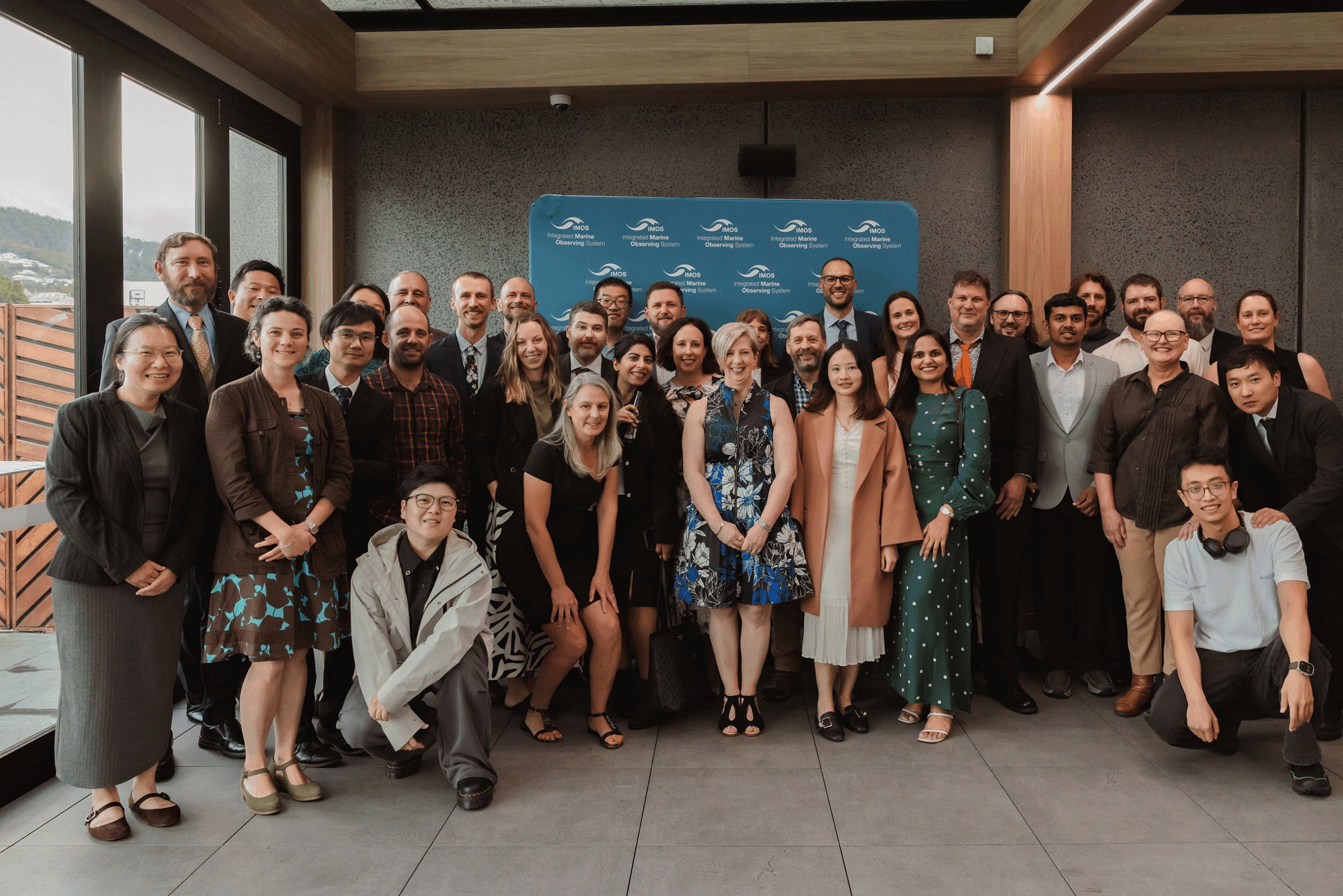
Header image: IMOS AODN team. Dearna Bond