
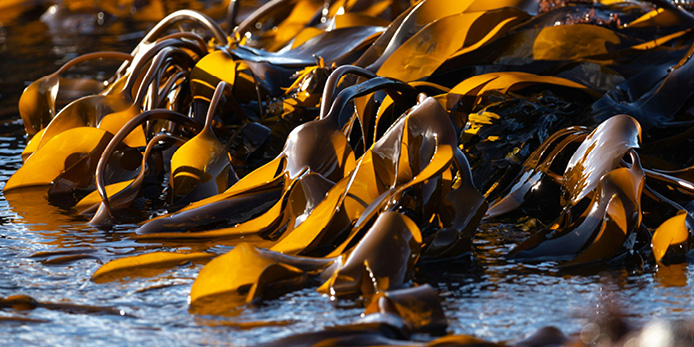
Kelp forests are important marine ecosystems along Australia’s temperate and subtropical coastlines. A new assessment-ready dataset is making observations of kelp species from marine imagery easier to access, analyse and use across research and marine management.
As part of the National Environmental Science Program (NESP) Marine and Coastal Hub Project 5.9, IMOS has developed a dataset that brings together kelp-related annotations from public marine image surveys hosted on the Squidle+ platform.
The dataset includes observations of a range of kelp taxa, including Ecklonia radiata, Phyllospora comosa, Macrocystis pyrifera, Durvillaea spp., Cystophora spp., Scytothalia dorycarpa, Lessonia corrugata and Perithalia caudata. Taxonomic labels have been aligned with the World Register of Marine Species (WoRMS), providing standardised scientific names, Life Science Identifiers (LSIDs) and taxonomic hierarchies.
The geographic coverage spans temperate and subtropical coastal waters of southern and eastern Australia, from approximately 113°E to 153°E and 44°S to 27°S. This includes major kelp forest ecosystems across the Great Southern Reef, south-east Australia and the eastern seaboard.
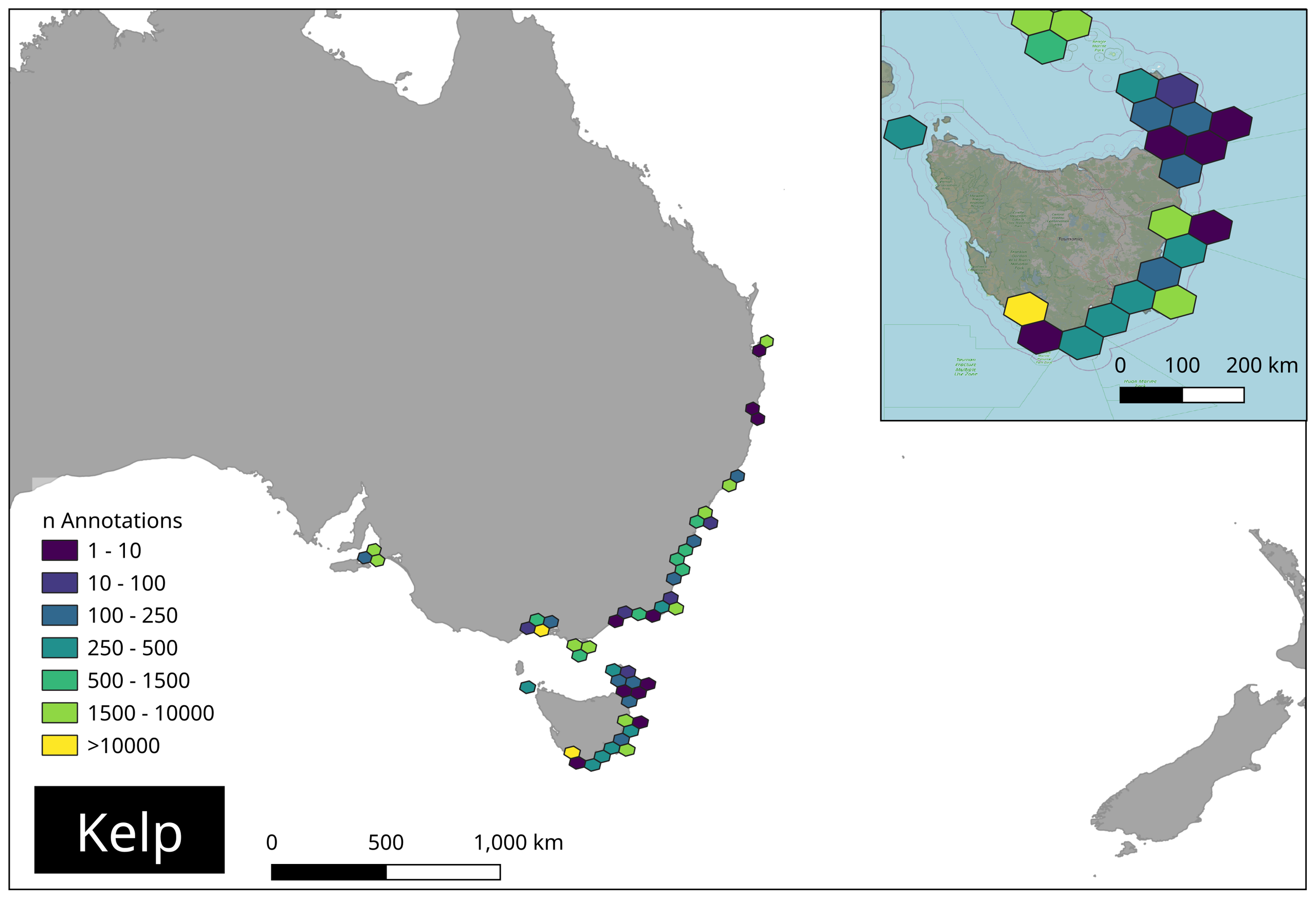
The dataset is available through the IMOS AODN Portal, where users can request a subset using a temporal range or by drawing a polygon on the map. A CSV or Excel-compatible file is then delivered by email.
For advanced users, the cloud-optimised product is also available through AODN S3 public data storage (AODN S3: s3://aodn-cloud-ptimised/aggregated_kelp_nonqc.parquet/), enabling programmatic access and analysis. Importantly, the dataset is automatically updated as new public annotations are added to Squidle+, ensuring the collection continues to grow as new observations become available.